

Outdoor Cushions vs Indoor Cushions - Key Differences
Indoor and outdoor cushions may look similar, but they often need to perform very different jobs. A sofa cushion in the living room is mainly designed for comfort and support. A garden cushion, boat cushion or patio seat pad may also need to cope with moisture, sunlight, dirt and regular movement. At AnyFoam, we supply foam cut to size for indoor and outdoor projects. Choosing the right cushion foam at the beginning can help the finished cushion last longer and feel better. What is the difference between indoor and outdoor cushions?The biggest difference is the environment. Indoor cushions are usually kept dry and protected. They are not expected to deal with rain, damp grass or changing weather. This means standard upholstery foam can often be used for sofas, chairs, benches and dining seats. Outdoor cushions need more thought. They may be exposed to moisture, temperature changes and UV light. Even if they are stored indoors overnight, they may still be used on damp surfaces or in humid conditions. The foam, cover and stitching all need to work together. What are indoor cushions filled with?Indoor cushions are often filled with polyurethane upholstery foam, fibre, feather or a combination of materials. Foam is popular for seat cushions because it provides support and keeps its shape well. Fibre and feather are often used for softer back cushions or decorative cushions. For a neat sofa cushion, foam can be wrapped in Dacron or fibre to create a fuller appearance. Stockinette can also be added to help the foam slide into the cushion cover more easily. What are outdoor cushions filled with?Outdoor cushions may use foams that handle moisture better than standard indoor upholstery foam. Closed-cell foam, for example, is more water resistant because its cells are sealed. Some outdoor cushions may use specialist reticulated foam designed to allow water to drain through, although the right choice depends on the project. The cover is just as important as the foam. A water-resistant or waterproof cover can help protect the inside, but seams, zips and stitching can still allow moisture in. Cushions left outside regularly should be made with this in mind. Comfort differencesIndoor cushions can usually focus more on softness and comfort. Outdoor cushions often need a balance between comfort and practicality. A closed-cell foam may resist moisture well but can feel firmer than a sofa foam. A softer foam may feel comfortable but may not be suitable if it holds water. This is why it helps to think about how the cushion will be used. A garden bench used occasionally may have different needs from boat seating or commercial outdoor seating. Durability and maintenanceIndoor cushions should be kept clean, dry and rotated where possible. If one seat is used more than the others, rotating cushions can help them wear more evenly. Outdoor cushions should be stored indoors or in a dry storage box when not in use, unless they are designed to stay outside. Let them dry fully before storage. Dirt and moisture can shorten the life of both the cover and the foam. Style and appearanceIndoor cushions are often made to match furniture and room decor. Outdoor cushions may need bolder fabrics, wipeable finishes or covers that resist fading. The foam should fit the cover well so the cushion looks full and tidy. If you are replacing only the foam, check the cover first. If the cover has stretched, shrunk or become damaged, new foam alone may not give the finish you want. Buying tipsMeasure carefully before ordering. Remove the old foam if possible and measure the cover. Think about thickness, firmness and whether the cushion needs to be brought indoors after use. Also think about the seat base. A cushion on a hard wooden bench may need more thickness than one on webbing or springs. For outdoor cushions, tell the supplier how exposed the cushion will be. Will it be used under cover, on a boat, in a garden or in a commercial outdoor area? These details help with choosing the right foam. Order indoor and outdoor cushion foam from AnyFoamOne final point is storage. Even good outdoor cushions will usually last longer if they are stored properly when not in use. A dry storage box, shed or indoor cupboard can protect them from unnecessary moisture and dirt. This is especially important during winter, when cushions may stay damp for longer and the covers may not dry as quickly. Indoor and outdoor cushions may look alike, but the foam inside should suit the job. AnyFoam can cut cushion foam to size for sofas, chairs, benches, garden seats, caravans and boats. Contact our team with your measurements and intended use, and we will help you choose a suitable foam. 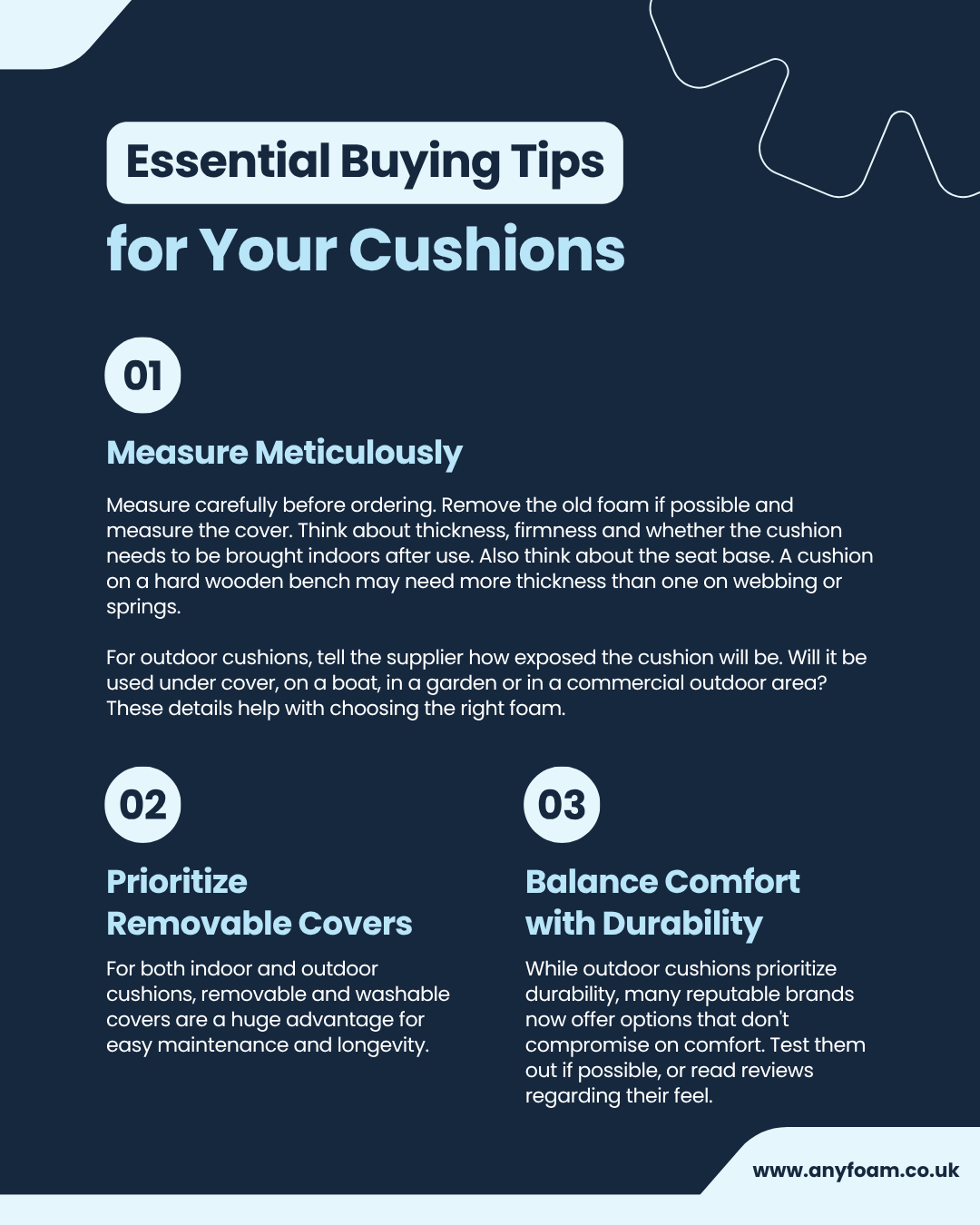
|