


How to Recycle Packaging Foam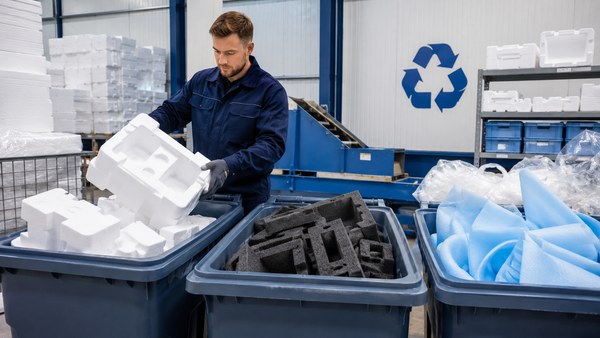
Packaging foam is used every day to protect products while they are being stored, shipped and delivered. It helps stop movement, absorbs knocks and keeps items safer inside a box. But once the product has arrived, many people are left wondering what to do with the foam. Recycling packaging foam is not always as simple as putting it in a household recycling bin. Different foam types are made from different materials, and local recycling rules vary. Even so, there are practical ways to reduce waste, reuse foam and dispose of it more responsibly. What is packaging foam?Packaging foam is foam used to protect goods. It may come as sheets, blocks, corner protectors, inserts, rolls, loose pieces or shaped packaging. It is often found around electronics, tools, instruments, furniture parts, glassware and other delicate products. At AnyFoam, we supply foam for packaging projects and cut foam to size. The main goal of packaging foam is to keep products secure, reduce movement and cushion items against bumps during transport. Different types of packaging foamPolyurethane foam is soft and flexible. It is often used for lighter, delicate items that need cushioning. It can be shaped into inserts, pads or convoluted egg-profile foam. Polyethylene foam is a closed-cell foam. It is firmer, more rigid and resistant to moisture. It is commonly used for heavier or more valuable items because it provides strong protection and can be cut neatly into packaging inserts. Anti-static foam is used for electronics and sensitive components. It is often pink and helps reduce the risk of static charge damaging electrical items. Polystyrene foam, including expanded polystyrene, is used in many packaging applications, especially for appliances and fragile goods. This is the white lightweight foam many people recognise from product boxes. Can packaging foam be recycled?Some packaging foams can be recycled, but it depends on the material and the facilities available in your area. Household recycling collections do not always accept foam packaging. This is because foam can be bulky, lightweight and difficult to process with other materials. Before recycling, check the material type if possible. Some packaging may have a recycling symbol or product information. If you are not sure, contact your local council or recycling centre. They can tell you whether they accept that type of foam. Reuse before recyclingOne of the best ways to deal with packaging foam is to reuse it. Foam that is clean and dry can be kept for future parcels, house moves or storage. It can be cut into smaller pieces and used to protect ornaments, tools, picture frames or electrical items. Businesses can also reuse foam inserts for repeat shipments or internal transport. If the foam is still in good condition, reuse is often easier and more practical than recycling. How to prepare foam for recyclingIf your local facility accepts packaging foam, make sure it is clean and free from tape, labels, food residue and other materials. Remove cardboard, plastic film and paper where possible. Contaminated materials are more likely to be rejected. Try to keep the foam separated by type. Mixing different plastics or foams can make recycling harder. If you have a large amount, such as from business packaging, it may be worth speaking to a specialist recycler. What if foam cannot be recycled locally?If recycling is not available, consider other ways to reuse the foam. Schools, craft groups, model makers and small businesses may find clean foam useful. It can be used for craft projects, protective storage, display work or DIY jobs. For businesses, reviewing the packaging design may help reduce waste. Custom foam inserts can sometimes use material more efficiently because they are cut to fit the product properly. This can reduce unnecessary bulk while still protecting the item. Eco-friendly thinking with foam packagingFoam packaging is used because it protects products. If a product arrives broken, that can create more waste through returns, replacement goods and extra transport. The aim should be to use the right amount of foam, choose suitable materials and reuse or recycle where possible. At AnyFoam, we understand that packaging needs to be practical as well as protective. We can supply foam cut to size, helping businesses create packaging that fits the product rather than wasting space. Need foam packaging advice?For companies that receive foam packaging regularly, it can be useful to create a simple reuse area. Clean foam sheets, blocks and inserts can be kept separately from general waste and used again for outgoing parcels or internal storage. This small change can reduce waste and also save money on buying new protective packaging materials. If you need packaging foam for products, storage or shipping, AnyFoam can help. Tell us what you need to protect, how it will be transported and whether moisture, static or impact is a concern. Our team will guide you towards a suitable foam for your packaging project. |